Retrospectives
The hardest, most important agile practice

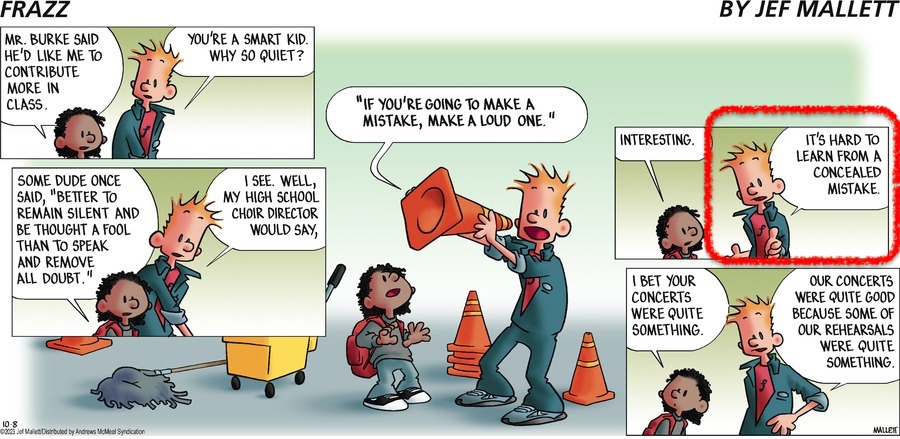
Retrospectives (retros)
The obvious part
- Look at what happened
- Figure out how to do better
Retrospectives
Why they don't work
- Gut feelings
- "Our codebase sucks!"
- Misdirected focus
- "Attendance at swarms sucks!"
- Blame
- "That's the third time you've broken the app!"
- Aspirational not operational proposals
- "Ensure all important requirements identified"
- Cures worse than the disease
- "Everyone who is late pays a buck per minute."
- "All code has to be reviewed by all team members before committing to main."
- Useless metrics
- "Tardiness is down 20%"
- "Lines of code written is up 25%"
Continual Product Development
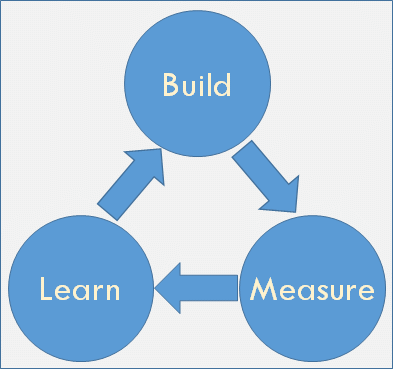
Continual Team Development
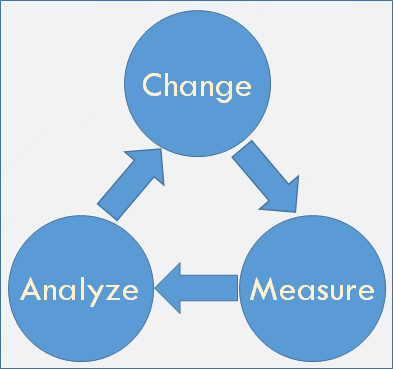
Retrospectives
Key components
- Focus on metrics that matter.
- Value delivered, morale, productivity
- Get data!
- Experiment. Try a small change in process.
- Useless: "Test more". This is a goal. How?
- Helpful: "Add 10-minute test time to swarm agenda". This is a process change
What are good changes to propose?
Common Agile Changes
- Acceptance tests
- Backlogs
- Burnup / burndown charts
- Continuous deployment
- Continuous integration
- Daily stand-up
- DTSTTCPW
- Feature teams
- Four-panel Storyboards
- Information Radiators
- Iterations
- Niko-niko charts
- Parking lot
- Plan B
- Post-It notes
- Refactoring
- Retrospectives
- Scenarios
- Story points
- Swarming and pairing
- Taskboards
- TDD
- Technical spike
- Timebox
- Transparency
- User stories
- Velocity
- Vertical slices
- Wideband polling
- YAGNI
Anti-Agile Techniques
- BDUF
- Non-colocated teams
- Scheduled milestones
- Silos
- Waterfall
- Weekly task assignments
Underlying Agile Themes
- Deliver value early
- Define by story
- Timebox
- Defer commitment
- Slice
- Make it visible
- Make it testable
- Minimize work in progress
- Minimize non-production
Getting Data (pt 1)
Weekly Self and Team ReflectionsGetting data (pt 2)
-
Leverage existing data streams
- Commit data (E.g., the Commit Log Analyzer )
- Make commits more useful:
- Tag commits by common Github tags: new feature, enhancement, bug fix.
- Add collaborators to commit messages
-
Brief records at each swarm.
- Who paired with whom on what
- Mood chart at end of each swarm
Further reading
Thanks to Hakim El Hattab for the slide template