Teams

The Secret to Success

Teams Make Most Software

  • with mixed roles
    • analysts, architects, designers, testers, writers, ...
  • with mixed personalities
    • shy, dominating, leader, follower, neat freak, slob, data nerd, night person, day person, problem solver, problem finder, ...
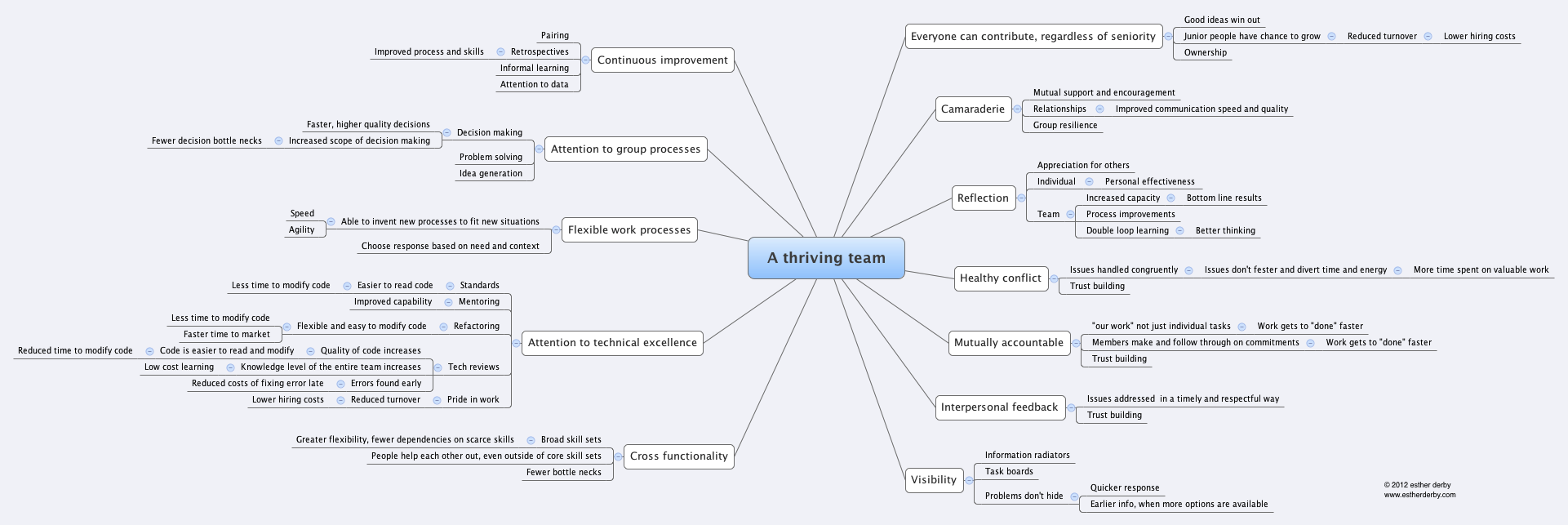
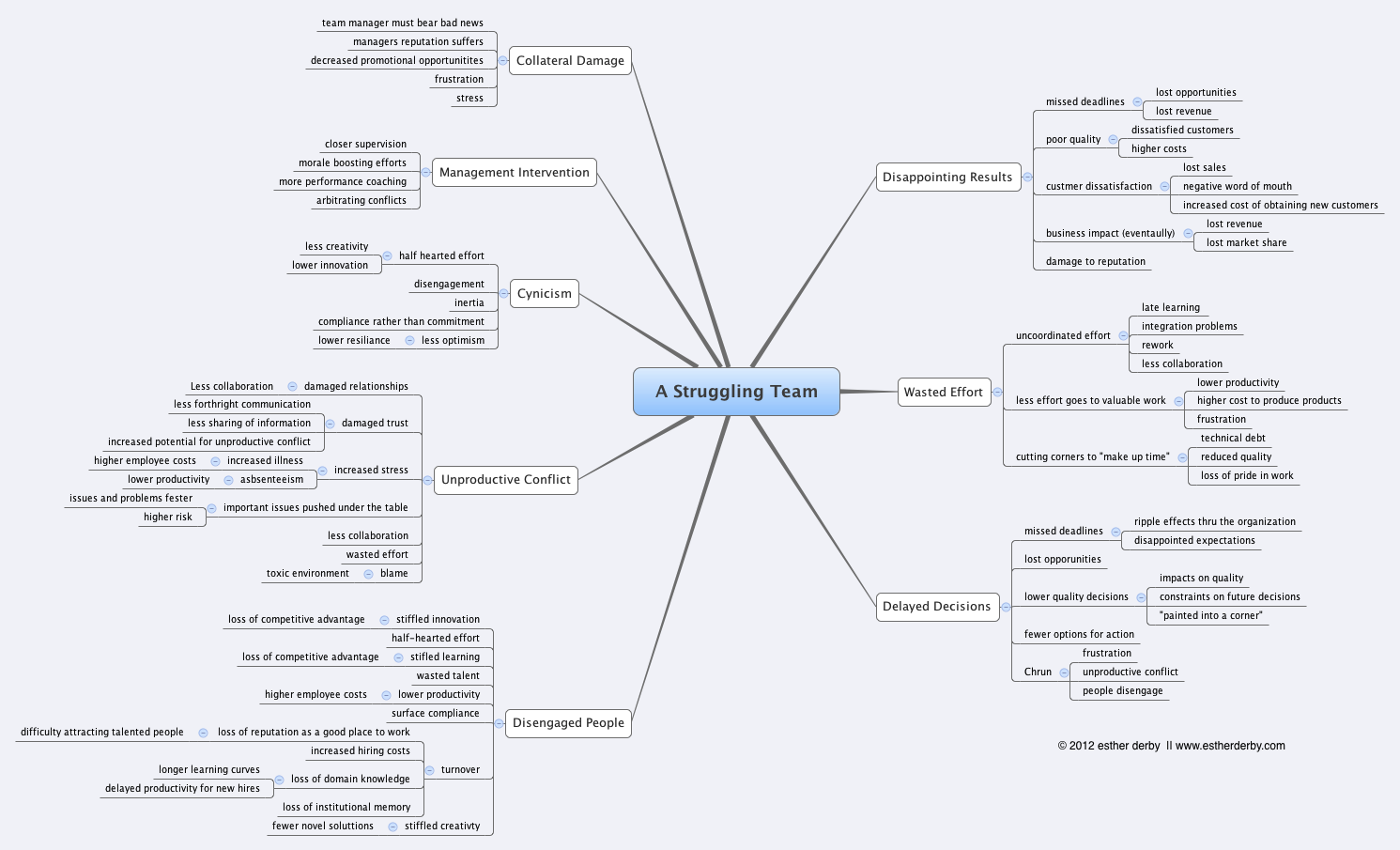
Teams Make or Break the Project

Team Development is Central to Agile

  • The last lines of The Agile Samurai
    Whenever you are wondering whether you are doing things the "agile way," instead ask yourself two questions:
    • Are we delivering something of value every week?
    • Are we striving to continuously improve?
    If you can answer yes to both those questions, you're being agile.

Team Review

  • Weekly self and team retrospection process
  • Every team has forms for self review and team review, and a "Data Viewer" spreadsheet with the responses for the current week and for the term.
    • Links to forms on Canvas
  • The major factor in your team grade.

Common Team Problems

  • A few members do all the hard coding
  • Some members do almost no coding
  • Some members have no idea how the app works
  • Some members dominate every discussion
  • Most members believe the #1 myth about teams (next slide)

Number #1 Myth about Teams

  • The purpose of a team is to split up work.
  • When you split up the work, you
    • lose a shared vision
    • make everyone a potential bottleneck
    • make everyone defensive of their work
    • make your Bus Factor = 1
Divide and conquer is what you do to the problem, not the team.

What Teams Are For

  • To gang up on problems -- show no mercy!
  • Create and share one vision
  • Minimize work-in-progress
  • Apply multiple views, skills and perspectives
  • Back each other up
  • Teach each other
  • Have fun!

The Secret to Success: Jelled Teams

  • A jelled team is one that is more than the sum of its parts. [Peopleware, 1999]
  • Signs of a jelled team:
    • low turnover
    • team identity
    • team pride
    • joint ownership
    • having fun

Incremental Agile Team Development

  • Speed kills! Don't focus on just the fastest way to get code written
  • Never program alone. Swarm and pair.
  • Training by pairing
  • Weekly team retrospectives

Building the Team

  • Invest an hour in getting to know each other beyond name and major:
    • When I like work (night owl, early bird, ...)
    • How I attack a problem (dive in, study the terrain, ...)
    • What I value (politeness, frankness, listening, leading, ...)
    • Where I want to be (developer at startup, big company coder, grad school, ...
  • See the Team Resources page on Canvas for some tools.

Train by Pairing

  • Integrate development with learning
  • Use classic pair programming with driver and navigator
    • Driver: someone who will learn the most from this task
    • Navigator: someone who knows the most about this task

Retrospectives

  • Every week
  • Do it at the start of the meeting
  • Timebox
  • Identify and then analyze metrics that matter , e.g.,
    • Buggy code, low productivity, ...
    • Bad bus factor, bottlenecks, ...
    • Low team morale

Best Practices

  • NO SILOS (The Agile Samurai, Chapter 2)
    • Divide and conquer is not your friend
  • Swarm / mob / pair
  • When soloing, slack / group.me the team when and what you're about to work on something

The Three Essentials to Jelling

  • Trust
    • You can let them know whenever you mess up.
  • Respect
    • You respect your team member differences.
  • Responsibility
    • Every problem is your problem.

Bad Repairs for Team Problems

  • Try harder
    • Whatever caused the problem before will cause the problem again
  • Make a big change
    • A brand new process is probably worse than the old one
  • Add more process
    • This is how software development got in trouble in the first place
  • You need to be SMART

Thanks to Hakim El Hattab for RevealJS